

Brand Amplification ROI: 6 Game-Changing Results to Expect

Most businesses don’t suffer from a lack of ideas.
They suffer from a lack of alignment.
You’ve got a product worth backing. A market that’s listening. Maybe even a brand you’ve invested in — with a logo you’re proud of, a message that feels mostly right, and a decent rhythm across your channels.
So why does it still feel like everything takes so much effort?
*You launch a campaign, but it barely lands.
*You refresh your homepage, but bounce rates stay flat.
*Your team builds a deck, and somehow it still sounds like every other company in your space.
Here’s the quiet truth: brand foundation isn’t the finish line. It’s the starting point.
It gives your business structure — but it doesn’t guarantee momentum.
That’s where brand amplification comes in. Amplification is the difference between knowing what your brand is — and actually activating it. Everywhere. Intentionally. At scale.
It’s what turns strategy into execution. It ensures your identity, your messaging, and your positioning don’t just sit in a deck — they show up at every single touchpoint.
Guiding your growth.
Shaping perception.
Sparking recognition before anyone even reads a headline.
(And if you’re not 100% clear on what “amplification” entails, this guide breaks it down in depth.)
But let’s move beyond definitions — and get into results.
Because once the deck is done and the vision is clear, a very different challenge begins:
Can your team actually deliver it?
Can your audience actually feel it?
Can your market actually remember it?
This is the real battleground. Not the launch day. The months that follow — when every email, pitch deck, landing page, partnership, and product experience either reinforces the brand or fractures it.
This is exactly what we’ve mastered at Eloqwnt: not just building brands, but amplifying them where it counts.
Because the brands that grow fast, and grow well, aren’t just the loudest. They’re the most aligned, most distinct, and most consistent — across every moment.
And unlike vague marketing promises, this isn’t about impressions or vibes.
Amplification has ROI you can actually measure — in conversions, retention, team speed, audience clarity, and market perception.
In the rest of this article, we’ll walk through 6 game-changing results you can expect when amplification is done right. These aren’t just industry theories — they’re the tangible shifts we’ve seen play out across real-world growth-stage brands.
But before we get into the outcomes, let’s clarify what we’re actually measuring.
Because “ROI” gets thrown around a lot — and most brands chasing it don’t fully understand what it takes to earn it.
What ROI Really Means (and Why Most Brands Miss It)
ROI isn’t just about “return on investment.”
In this context, it’s about return on implementation.
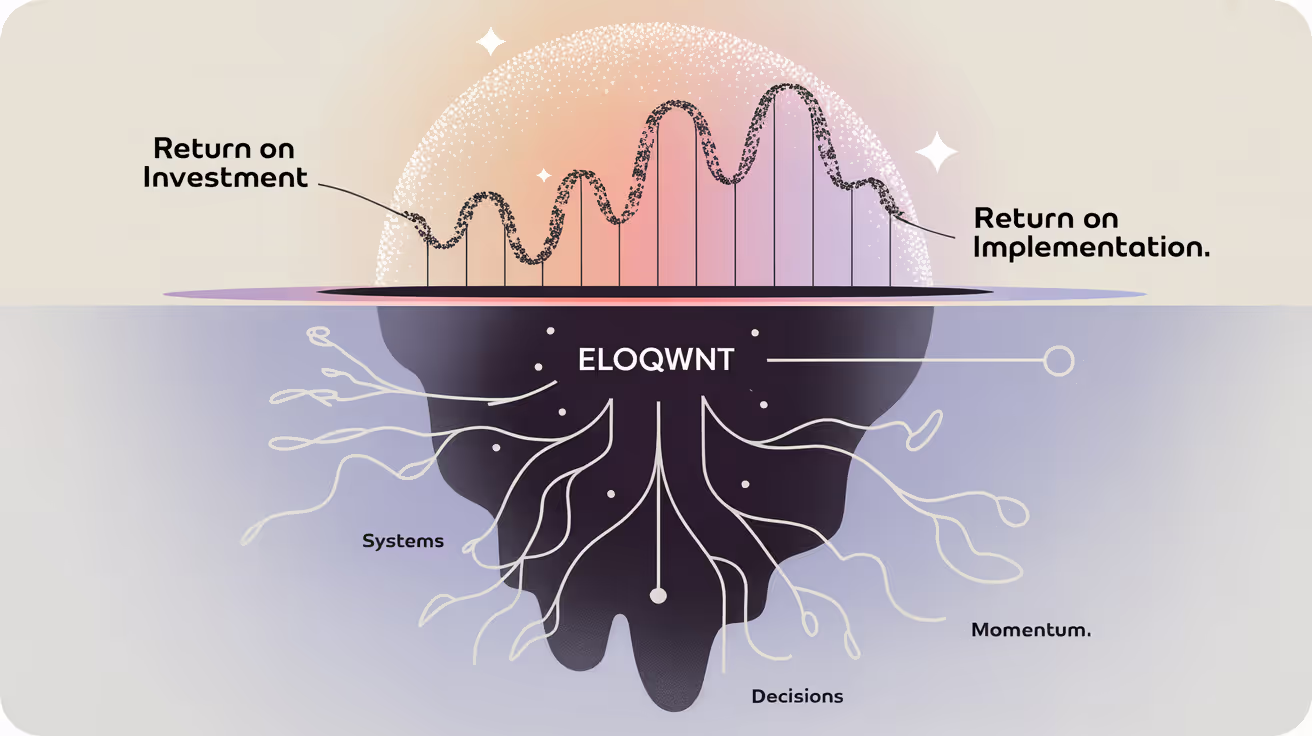
It’s not about how sleek your rebrand looks in a deck, or the vibe it gives off, or a momentary spike in engagement — and it’s definitely not something you can track in likes.
The real ROI of branding — especially at the amplification stage — shows up in the systems, decisions, and momentum that branding unlocks.
You’ll see it when:
- Your sales cycle shortens without changing your product
- Your team ships faster because messaging is already aligned
- Your creative doesn’t just ‘look good’ — it performs consistently
- Your audience recognizes and recalls you across touchpoints
- Your positioning doesn’t need to be explained — it’s felt
These aren’t just marketing wins. They’re business multipliers.
But here’s the quiet truth most teams overlook: ROI doesn’t just come from what you invest – it comes from how consistently you activate what you’ve built.
And that’s where the breakdown usually happens.
Teams invest in the right things — identity, positioning, messaging. They workshop the values, align the tone, polish the visuals.
But then?
They stop.
The brand lives in a beautiful deck or a Notion folder — but never fully makes it out into the real world.
No one’s owning it across channels.
No one’s evolving it based on feedback.
And no one’s applying it at scale.
So even though the strategy is solid, the impact stays surface-level. Recognition fades. Trust stalls. Momentum never builds.
But that’s also why amplification matters. Because the returns that compound don’t come from changing who you are — they come from making who you are impossible to ignore.
And with that in mind, let’s get to the real reason you’re here: the real-world results you can expect when brand amplification is done right.
1. Execution speeds up across teams
Let’s start with the most immediate shift: operational speed.
But we’re not talking hustle-culture speed. We mean velocity with intention — the kind of momentum that comes from everyone rowing in the same direction because they’re aligned on more than just deadlines.
What slows teams down isn’t lack of talent. It’s the small messes no one notices.
→ Briefs that take forever to write.
→ Rewrites that come too late.
→ Designers chasing feedback.
→ Writers guessing tone.
→ Projects stalling because someone says, “It doesn’t feel like us.”
And when you add it all up? Weeks — gone.
That’s where brand amplification makes a measurable difference.
By turning your brand system into actual working tools — voice templates, UI rules, naming patterns, motion logic, decision ladders — you make it usable across every team.
So instead of:
- Writers second-guessing every word,
- Designers inventing things from scratch, or
- PMs waiting three days for “brand sign-off,”
you get teams that know exactly what “on-brand” looks like — and can do it themselves.
That leads to real output:
- A full landing page, done in 2–3 days.
- Campaign assets delivered on time — with fewer revisions.
- Internal decks that don’t need 7 rounds of “tone tweaking.”
We’ve seen teams cut timelines in half when their system actually works for them — not just sits in Figma.
And when your people spend less time aligning, they spend more time executing — which is the kind of ROI you can’t ignore.
2. Conversion improves — even without spending more
Let’s reframe what a conversion really is.
It’s not just a user clicking “Sign Up.” It’s a moment of belief.
A moment where someone thinks: “I get what this is. I trust what it says. And I’m ready to move forward.”
That belief? It’s not triggered by product features alone. It happens much earlier — in the brand signals you send before anyone ever touches your product.
And here’s where the ROI gets real. When your brand is fully amplified — across copy, visuals, motion, UX, and interaction — those signals don’t just look good. They build confidence.
The result:
- Fewer users drop off at your homepage
- More users click through to your key flows
- CTAs get more engagement — without needing louder language
- Your funnel stops leaking trust before it even starts
Here’s what’s actually driving that lift:
- Visuals align with message — so there’s no mixed signals
- Your tone feels intentional — so users stop wondering if you’re legit
- Micro-interactions, transitions, layout decisions — all subtly reinforce who you are and how you deliver
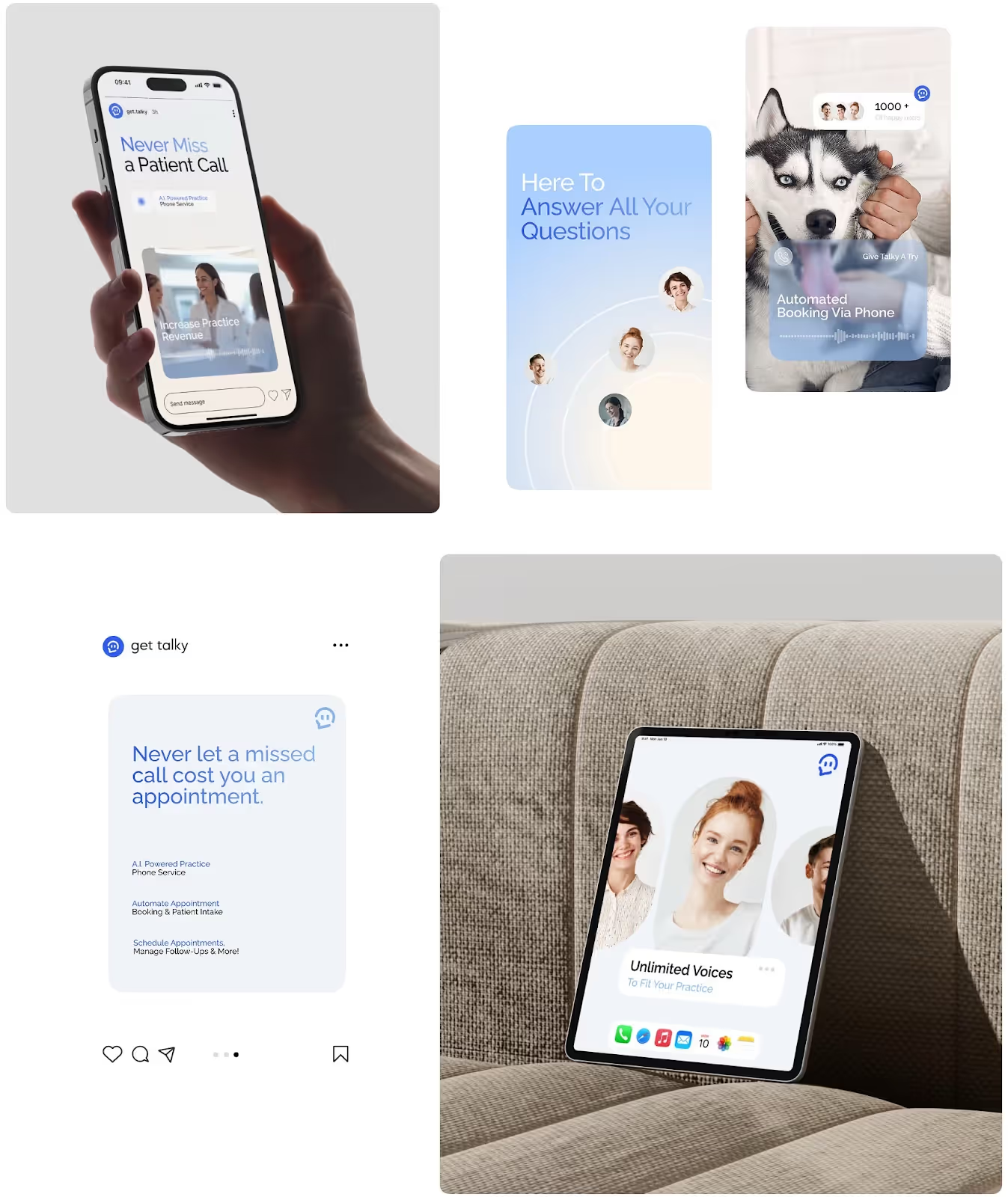
In fact, brands with consistent messaging and design see conversion increases of 10–20%, purely from better alignment. And rarely is the product itself changed — just the path to it.
When your brand feels frictionless, credible, and confident — before anyone even logs in — people don’t just click more. They arrive with fewer doubts, fewer objections, and a lot more intent.
That’s what amplified brand clarity does: It doesn’t just decorate the funnel — it pulls people through it.
(For more on why brand consistency directly impacts performance, see our deep dive: The Power of Consistency in Branding)
3. Marketing starts adding up over time
Let’s be honest: in many teams, marketing feels like a bunch of disconnected pushes:
One-off campaigns ➝ weekly content sprints ➝ landing pages that don’t talk to ads ➝ ads that don’t sound like emails ➝ emails that contradict the site.
So even if they work individually — they don’t add up.
Amplification solves this by creating brand coherence that compounds across time and channels.

Here’s what that looks like in practice:
• Your paid campaigns match the tone of the homepage — so visitors don’t feel like they’ve landed somewhere else.
• Your product marketing builds on the same visual and verbal logic — so new messages feel familiar, not foreign.
• And your social content actually reinforces the narrative — not rewrite it from scratch every quarter.
The result?
Each new message doesn’t start over — it reinforces what’s already working.
That means:
• Lower CAC, because your audience learns faster.
• Higher engagement, because your voice feels trusted.
• Better ROI across the whole funnel, because every channel is rowing in the same direction.
In other words, your marketing stops being noise — and starts building brand equity.
4. Retention improves — because the promise holds up
Here’s a quiet killer of retention: expectation gaps.
When your marketing feels like one thing and your product feels like another, people notice. Maybe not on Day 1. But by Day 7, the trust crack has already started.
And trust lost early is hard to regain.
Amplification fixes that — by making sure your brand promise and your product experience speak the same language.
Here’s how it plays out:
1. If your tone says “fast, simple, intuitive” — your UX better deliver the same energy.
2. If your brand voice is clever and confident — your error messages can’t be robotic or awkward.
3. If your visual identity feels premium — your onboarding flow can’t feel like a template.
When the brand and product match, users don’t just stay longer — they stay loyal. Because the promise is real.
That means:
↓ Lower churn
↑ Higher NPS
→ More referrals — not just from satisfied users, but from impressed ones. The kind who say, “You have to try this.”
5. Approvals go faster — and launches follow
We’ve already talked about misalignment across teams — but here’s another version you’ve probably seen more than once: a headline that doesn’t land, visuals that feel off, and suddenly the launch is delayed, the deck’s stuck, and Slack’s full of second-guessing.
It’s what misalignment looks like during delivery — and it slows everything down.
Because when teams don’t trust the system, they don’t trust the output. And when they don’t trust the output, nothing ships on time.
But here’s what changes when your brand system is truly amplified: you stop reviewing everything, because alignment isn’t something you chase — it’s already baked into the baseline.
Instead of this:
Designer → brand → creative director → leadership → back to designer
You get this:
Designer → approved, done.
That’s not a shortcut. It’s the result of systems doing the heavy lifting. Everyone already knows:
- What tone to use (and when to adjust it)
- How to size, space, and animate things
- When something’s in bounds — and when it’s not
The brand becomes the filter, not the bottleneck — and the result isn’t just less frustration, but a measurable increase in speed-to-market you can actually see.
- Campaigns launch on time.
- Sales decks don’t sit in revision limbo.
- Product marketing aligns without a 10-person Slack thread.
We’ve seen brands cut launch cycles by 30–50% just by tightening their approval flow.
That’s ROI — in time saved, in clarity gained, and in opportunities captured before competitors even hit “send.”
6. Your company starts feeling bigger — and playing smarter
The last (and least obvious) result? You don’t just look more established — you start operating like you are.
When your brand system is mature — visually confident, verbally distinct, internally adopted — your entire company punches above its weight.
→ You attract better partnerships.
→ You earn more press.
→ Your team sounds sharper in interviews, pitches, LinkedIn posts.
→ Your investors share your work more often.
Because amplification isn’t just about the materials — it’s about how your company shows up in the world.
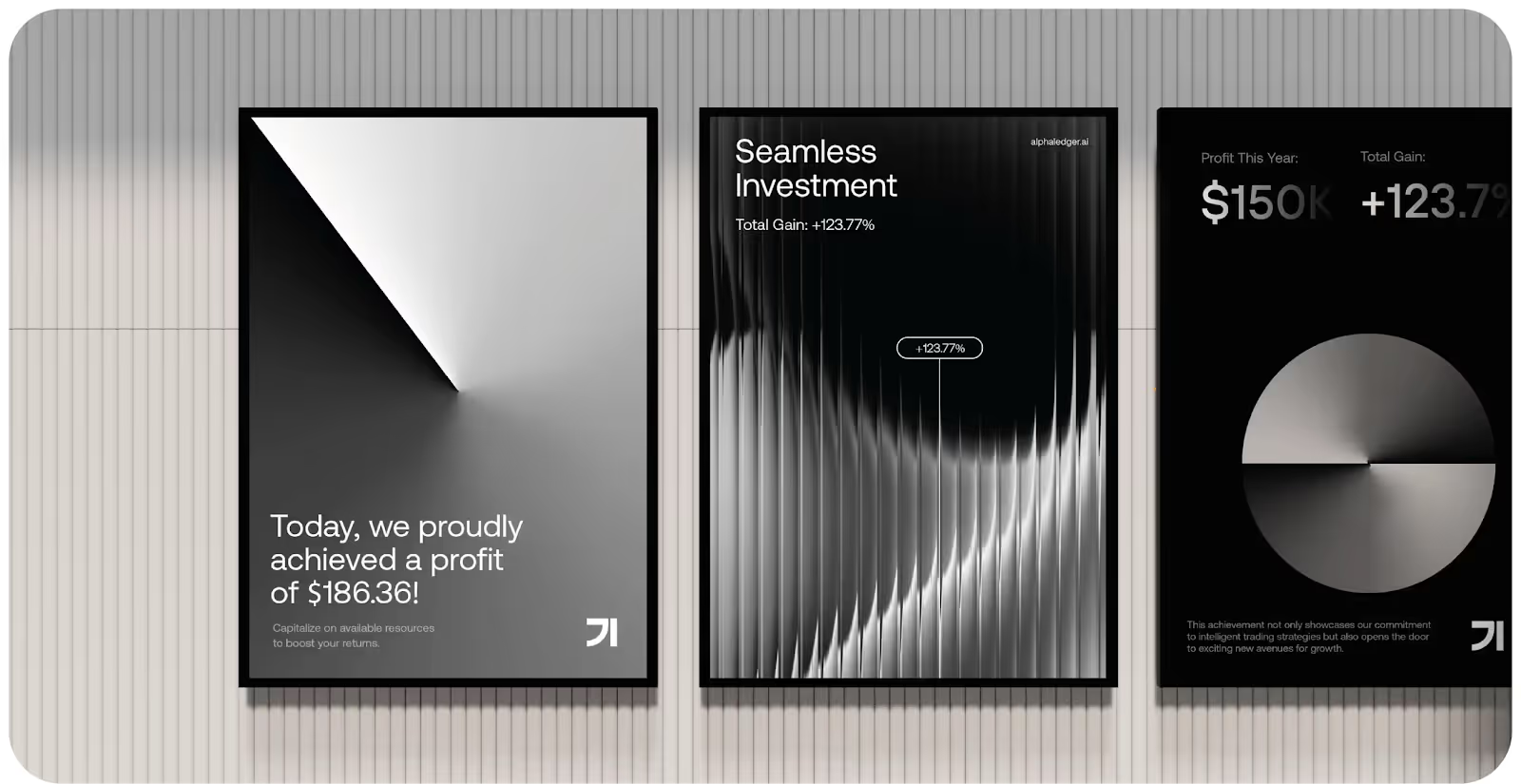
You don’t just look more grown-up. You sound more focused. You move with more clarity. You earn more trust.
And that trust turns into:
- Bigger deals closed faster.
- Stronger hires — because talent trusts your direction.
- More enterprise
In short: when your brand works, everything starts working a little harder.
Internal Links & Related Reading
If you’re navigating brand alignment, systematized execution, or trying to unlock faster growth through smarter branding, these reads expand on the thinking behind amplification:
• Curious about how amplification actually differs from branding? Read our breakdown of Brand Amplification vs. Branding — it’s a strategic look at why many good brands still underperform.
• If the shifts we described here sound familiar, you might already be due for an upgrade. Explore the 6 signs it’s time to amplify your brand — and what happens when you do.
• Ready to take action? Our complete guide on how to amplify your brand covers the real process — from aligning your system to scaling your impact.
What It All Comes Down To
Brand amplification doesn’t have to wait until you’re “big enough.”
In fact, waiting is what keeps most brands small.
The earlier you treat your brand as a growth system — not a decoration — the faster everything else starts working.
Because the ROI isn’t just in the numbers.
It’s in the shift — from friction to flow, from guesswork to confidence, from noise to meaning.
If you want to be one of the brands seeing that shift play out in real time, we’re here for exactly that. Our work turns alignment into execution — and execution into results.
Let’s build the system that unlocks your momentum!




The right partner at the right moment changes everything.
Tell us about your next stage.


