

Differentiation is Engineering: How Strategic Branding Breaks the B2B “Sea of Sameness”

Why Your Marketing Failures Are Actually Branding Problems
Marketing fuels a weak brand engine.
Without clear positioning, even perfect execution produces commercialized results.
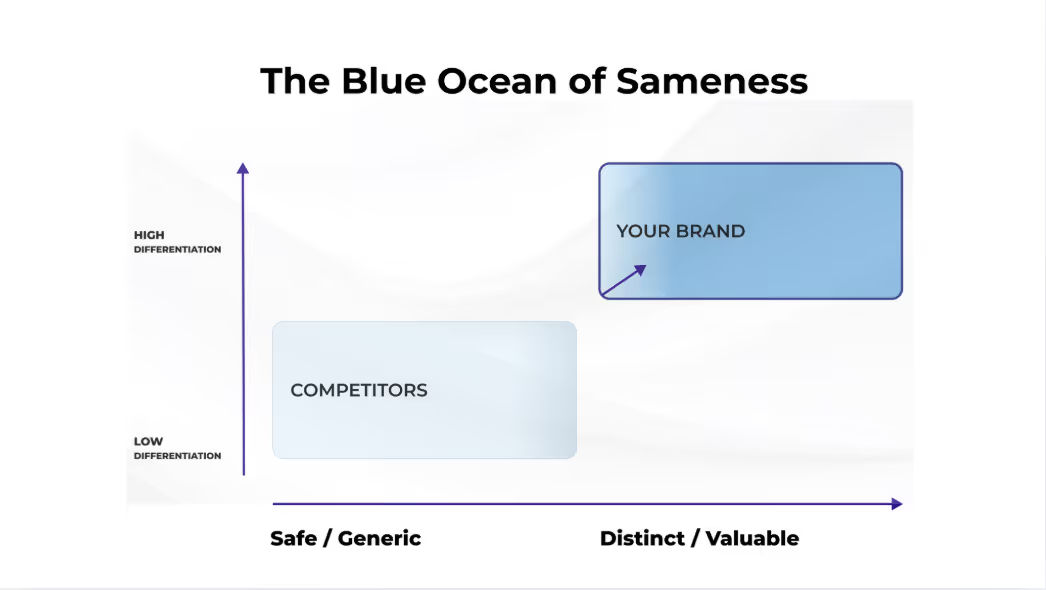
The "Sea of Sameness" Trap
Your product is better. Your team is sharper. Funding rounds are bigger.
Yet Series B/C fintechs lose deals to weaker tech. Why? The market can't tell you apart.
94% of B2B value propositions are undifferentiated (LinkedIn B2B Institute).
Buyers face decision paralysis when 10 vendors look identical - same blue gradients, isometric laptops, "AI-powered workflow" promises.
Technical Excellence vs. Market Perception
You’re hitting your traffic KPIs, but your demo queries remain flat.
This disconnect between spending and capturing demand is a direct threat to your marketing value, as your brand fails to convert raw attention into proprietary trust.
The Trap of "Better"
Series B/C founders often mistake technical superiority for market authority.
Technical advantage is a silent killer.
While your product may be superior on paper, failure to move beyond visual maturity to MVP results in predictable margin erosion.
To scale, fast-growing startups must move from incremental features to a visual identity that reflects institutional stability.
The logical answer? Double down on incremental improvements:
- More features for every point
- Faster onboarding to reduce friction
- A polished UX that feels a little more modern
- Competitive pricing to win on value
This approach seems rational. “Better” should win deals, but positioning expert April Dunford points out a flaw: “Better” is subjective.
Without a frame of reference, additional features fade into the background noise.
Buyers don’t evaluate individual improvements, but offerings within established categories “Another Neobank,” “Just another CRM.”
Procurement teams default to the lowest price among functionally equivalent options.
Commercial implications
Margin erosion is predictable:
- Pressure on EBITDA increases as discounts become structural
- Premium valuation multiples disappear - investors see risk of commoditization
- CAC increases as sales cycles lengthen, battling feature parity debates
Insight is penetrating: “Differentiation” is binary.
Either you own a distinct position in a category, or you’re fighting for pieces in someone else’s.
Agencies that promise incremental improvement are delivering visual appeal, not strategic differentiation.
The Mechanics of "Only-ness"
Moving from description to conviction isn’t a creative brainstorm; it’s an extraction.
At Eloqwnt, our Strategic Workshop acts as a "War Room" where we strip away industry jargon, "best practices," and vague promises to find your true differentiation point.
We don't just add a layer of design - we isolate the protected intersection of your company DNA and competitive whitespace.
To move from "We do X" (Functional) to "We believe Z" (Strategic Narrative), we focus on the "Rallying Cry" concept.
A brand position must be sharp enough that it might repel the wrong customers to magnetize the right ones.
This intentional polarization isn't a risk - it's the only way to break the Sea of Sameness and institutionalize your authority.
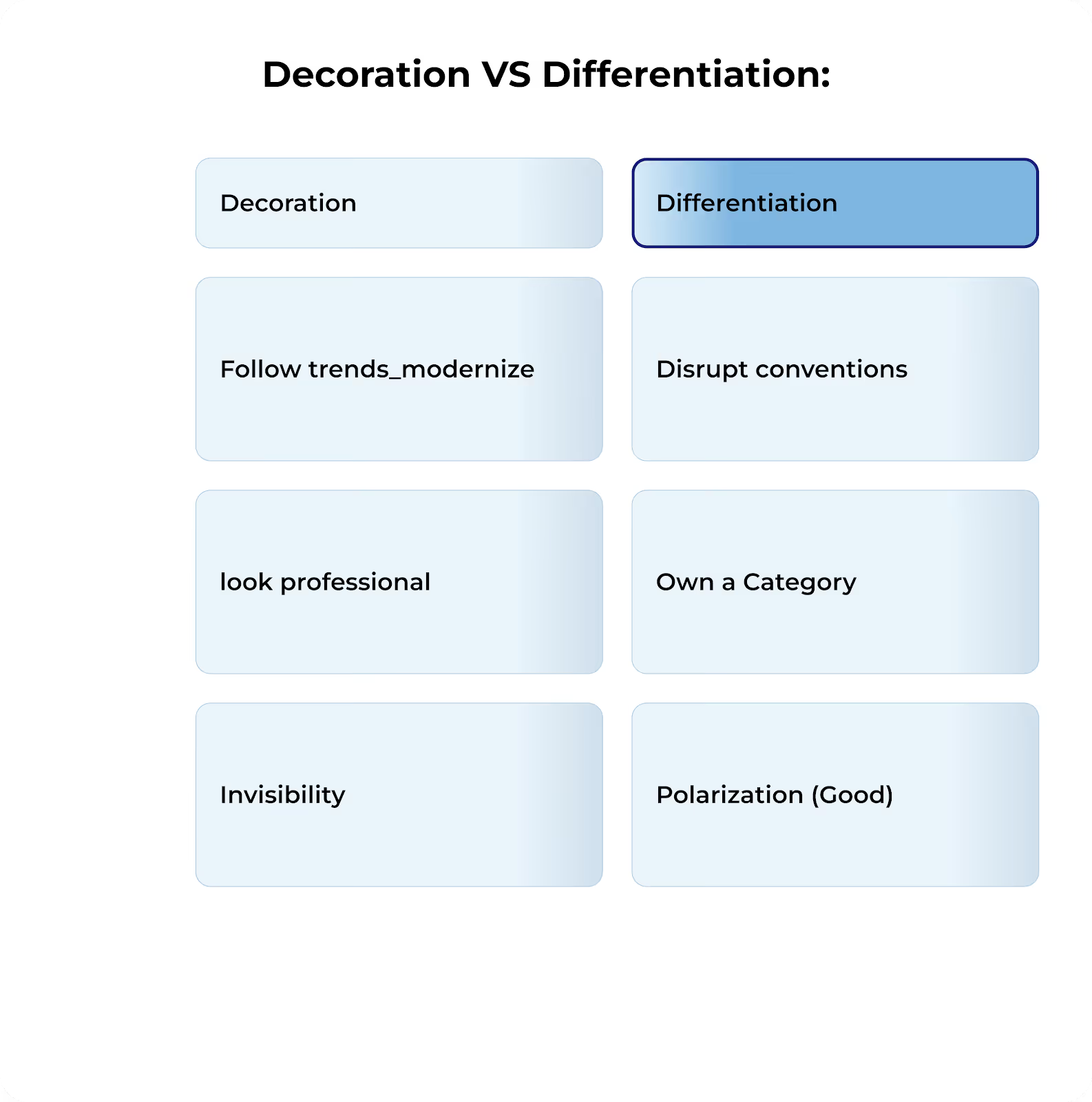
Decoration vs. Differentiation
Many founders mistakenly consider a fresh color palette or a modern font to be a competitive advantage.
In reality, there is a huge gap between “decorating” the existing chaos and developing a strategy that ensures market leadership.
The Institutional Paradox: Why "Safe" is Your Most Dangerous Move
Corporate buyers are not looking for mediocrity, they are looking for uniqueness and justification.
Choosing a formulaic, “boring” brand is actually the highest risk for the stakeholder, as it signals a lack of conviction and leadership in the market.
You can demonstrate institutional-level trust and stability without getting lost in the “Sea of Sameness.”
In fact, your own visual identity is what proves that you are built to handle critical, long-term workloads.
Frequently Asked Questions
Why is B2B branding so identical in developed markets?
Because most B2B companies optimize for approval, not impact.
Most B2B companies fall into the “safety trap.” This leads to a Sea of Sameness.
While it may seem safe, this invisibility is your biggest financial risk as it directly leads to commercialization and reduced profits.
How can you effectively measure brand differentiation?
Differentiation is measured not by aesthetics, but by commercial effectiveness.
To see if your brand is actually working, track these performance metrics:
- The 3-Second Rule: Can a buyer instantly distinguish you from 10 identical competitors?
- Sales Velocity: Does your positioning eliminate "feature parity" debates and shorten the sales cycle?
- Price Premium: Can you sustain higher margins without losing conversion?
- CAC Efficiency: Does your brand act as a filter, repelling low-intent noise and magnetizing the right buyers to lower acquisition costs?
Don’t let your best product drown in a sea of generic branding.
Test your differentiator with Eloqwnt by turning your identity into a powerful engine for market influence.
Branding as a Market Lever
We don’t polish products. We build the infrastructure of choice.
There’s a big difference. Stop renting attention and start owning your category.
B2B branding is a strategic lever for your EBITDA, not an aesthetic exercise.
By treating differentiation as engineering, not art, you turn visual capital into a tool that protects future cash flow.
If you’re ready to institutionalize your authority and lower your CAC, book a brand architecture audit.
Let’s turn your identity into a lever, not a layer.



The right partner at the right moment changes everything.
Tell us about your next stage.


