

The "Price Anchor" Effect: Why Your Logo Can’t Justify Your Enterprise Contract

You’ve built a world-class product. It solves critical inefficiencies, and your engineers have obsessed over the architecture for years.
However, when the offer comes up for discussion, prospects are reluctant to pay attention to the price.
You start discounting just to get a signature.
The uncomfortable truth: It’s not a functionality problem, it’s a signaling problem.
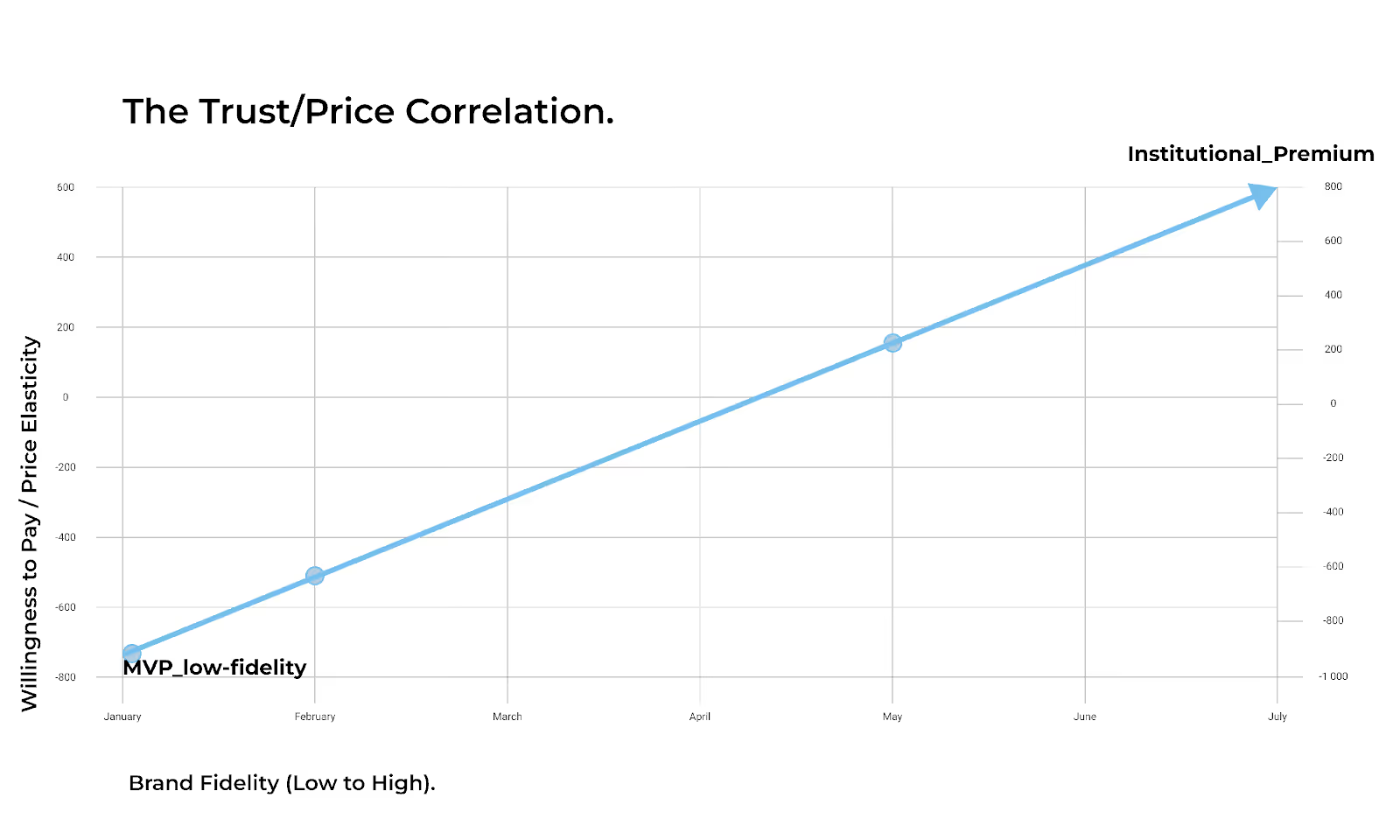
Your “MVP era” branding sets the customer’s price expectations at £500 per month, but you’re asking for £50k per year.
This dissonance occurs when an enterprise-grade product is presented with startup-grade visuals, leading to decreased trust and increased price sensitivity.
Your brand is part of your sales team. If it’s underdressed, it will cost you money.
The Psychology of Price Anchoring in B2B
B2B buyers remain human. They judge risk vs. quality in seconds via surface credibility cues: layout clarity, design cohesion, and visual fidelity.
Using System 1 thinking (Kahneman), buyers deploy visual heuristics for rapid risk assessment before any feature analysis begins.
A logo is just one pixel, strategic branding manages the entire evidence trail: the cold email one-pager, the demo deck, and the proposal PDF.
If your brand signals commodity, procurement will price you accordingly.
Advanced SaaS pricing psychology confirms that a high-anchor presentation (premium visuals first) makes a £50k contract feel reasonable rather than an inflated ask against bootstrap branding.
High-fidelity design signals institutional stability and low risk, which are the primary drivers of enterprise purchasing.
Why a Logo Won't Save Your Deal: The Touchpoint Ecosystem
In the modern consumerization of B2B, a "pretty logo" is irrelevant if the rest of the commercial interface is fractured.
While logos decorate business cards, strategic branding functions as commercial infrastructure - it controls the buyer journey exactly where price resistance forms.
The Brand Operating System must govern every touchpoint to prevent the Premium Gap from sabotaging your margin protection.
Inconsistency breaks trust faster than a weak product demo.
Because buyers don’t consciously analyze it - they feel it. The website says one thing.
The deck says another. Sales tells a slightly different story. Design, tone, and messaging don’t line up.
And the buyer’s internal monologue goes: “If they can’t align their own communication, how will they handle our complex integration?”
Consistency functions as Commercial Infrastructure.
The Brand Operating System must govern every touchpoint:
1. The Cold Outreach: Does the one-pager look disposable or institutional?
2. The Demo Deck: Is it a chaotic PowerPoint or a structured narrative?
3. The Proposal: Does the document design command authority?
Using Sales Enablement Templates prevents "rogue sales decks" from diluting brand value, ensuring that every asset reinforces the premium anchor.
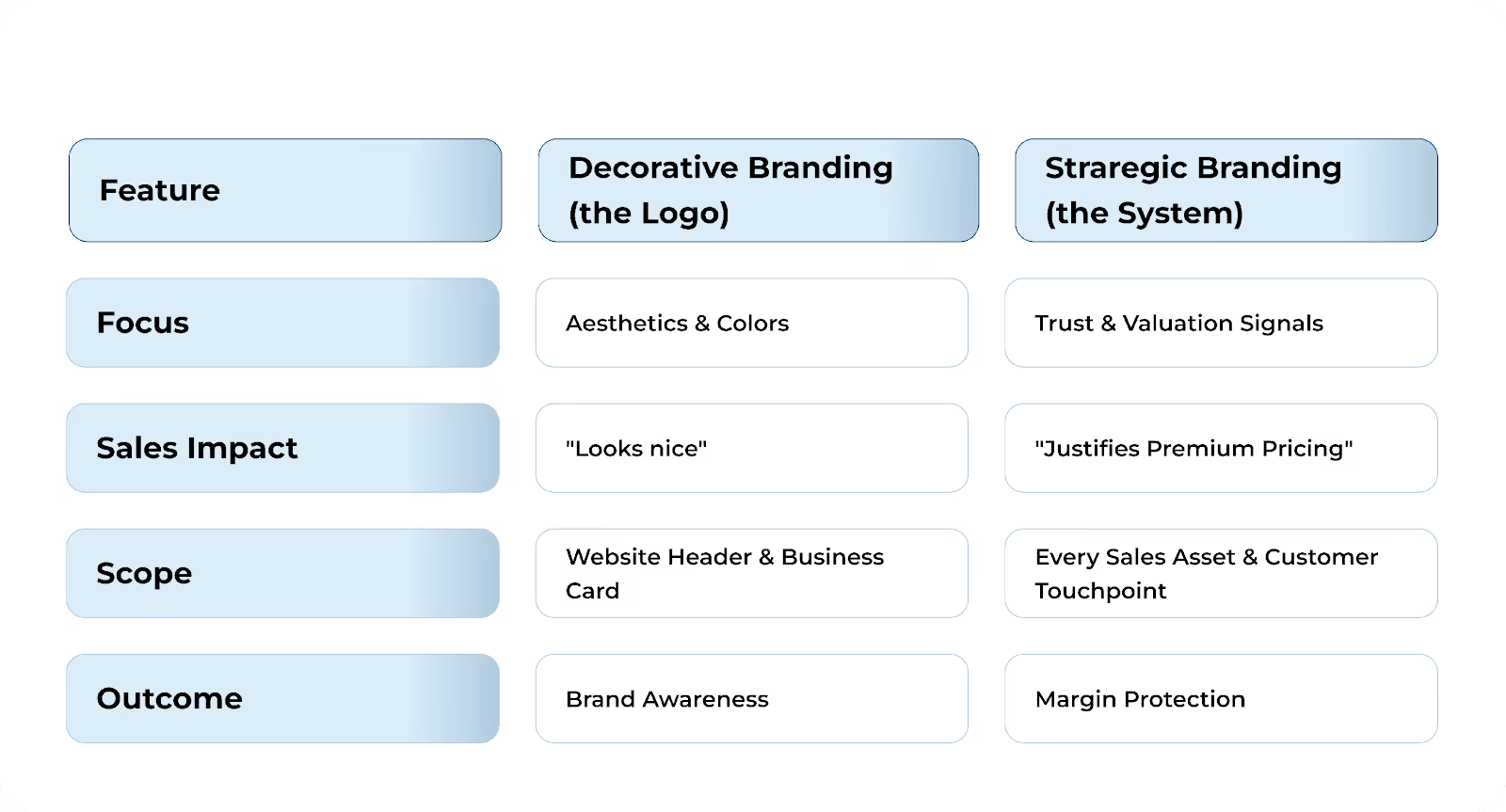
Decorative Branding vs. Strategic Infrastructure
High-ticket SaaS sales don't need "pretty branding." You need Strategic Branding that works as Commercial Infrastructure.
This table shows the difference: MVP-era looks vs. a Price Anchor system that protects margins and removes friction at the close.
Understanding this closes your Premium Gap, moving you from defending costs to validating institutional value.
FAQ: The ROI of Premium Positioning
Q: Does design really affect enterprise contracts?
A: Yes. Enterprise buyers do not purchase "features"; they purchase "Low Risk".
High-fidelity design acts as a Trust Proxy that signals institutional stability and lowers perceived implementation risk.
Trust Proxy In high-stakes B2B sales, your visual identity serves as a heuristic (mental shortcut) for quality.
If the brand looks cheaper than the ask, the deal stalls because the buyer perceives higher risk.
Q: Can't we just fix the website?
A: No. Inconsistency breeds distrust.
If your premium anchor starts on a high-end website but falls apart in a mediocre sales deck, the "spell" of credibility is broken.
This creates unnecessary friction in the final negotiation stages and forces your team into defensive discounting.
Q: How do we measure the ROI of branding?
A: We measure success through margin protection.
Specifically, we track the reduction in discount requests as a percentage of qualified opportunities and the acceleration of the sales velocity by shortening the procurement review phase.
Final Thought: Design is Value Engineering
In a high-stakes corporate environment where differentiation in a saturated market is the only way to avoid a race to the bottom, your visual identity is no longer a matter of aesthetics.
It’s a margin-protecting asset - one that either protects your price or becomes a liability that undermines years of development.
Strategic branding isn’t a cosmetic upgrade, it’s a reengineering of your commercial infrastructure to eliminate the “trust tax” hidden in your sales cycle.
If you’re ready to transform your brand into a tool to accelerate sales and protect your capital, ask yourself one question: Does your “visual evidence” match the seriousness of the contract you’re asking for, or does it give the buyer a reason to ask for another discount?
Audit your “premium gap” and align your brand with your pricing strategy today.



The right partner at the right moment changes everything.
Tell us about your next stage.


