

Why Your Marketing Failures Are Actually Branding Problems

You’re hitting your traffic KPIs, but your demo queries are still flat. LinkedIn advertising is a waste of budget, and your prospects are “low intent.” Sound familiar?
So, what’s the difference between brand strategy and marketing? Marketing is the tactical promotion of a product.
Brand strategy is the fundamental logic behind its importance. It creates appeal and reduces friction in sales.
This article shows you how to transform your brand from an operating expense to a capital expense using Binet & Field data, spreadsheets, and The Foundation® process.
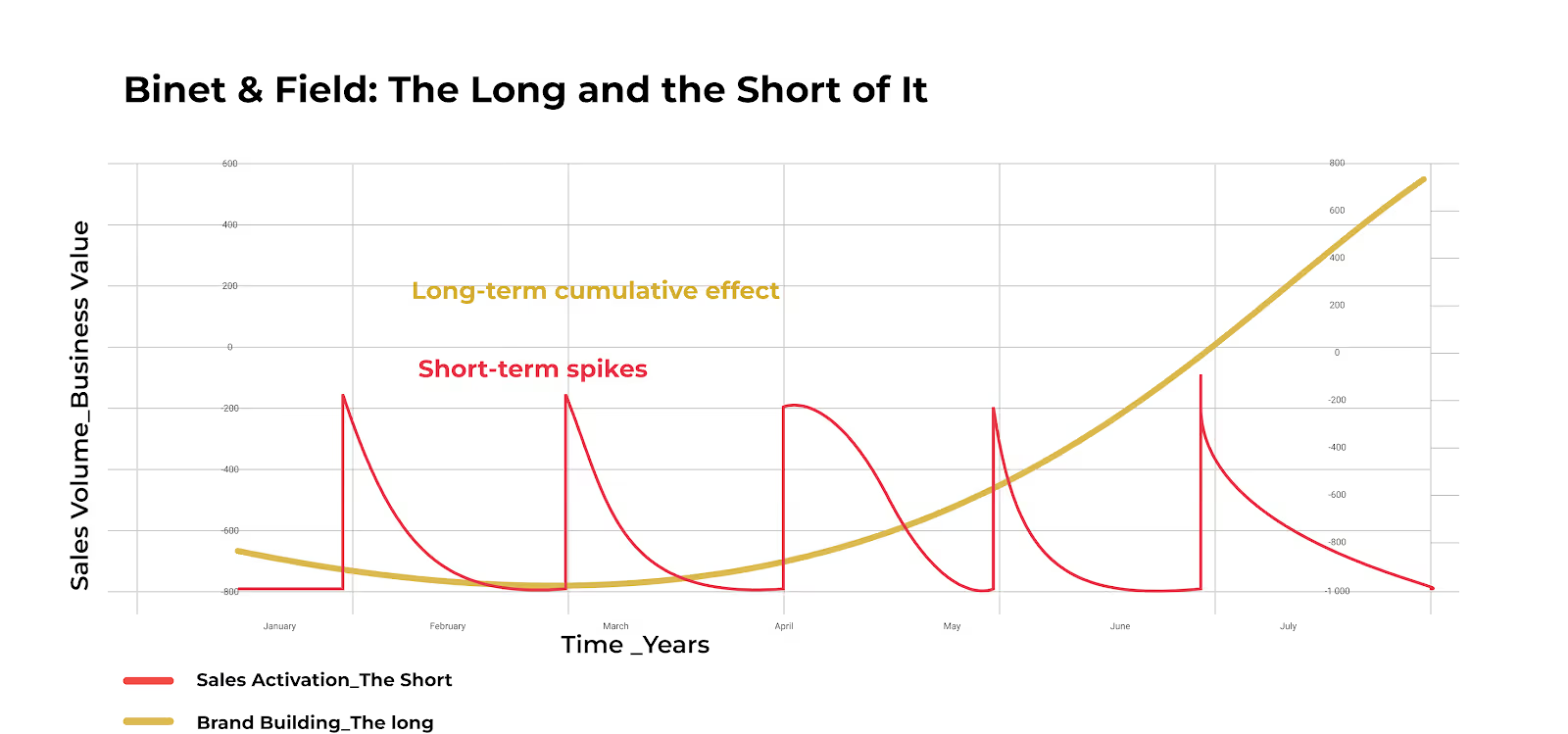
The Economic Distinction: CapEx vs. OpEx
Have you ever wondered why your marketing budget disappears overnight?
The answer lies in the fundamental difference between tactical spending and strategic investment.
Marketing as OpEx
Marketing is an operating expense (OpEx), the fuel that fuels today’s CTR and leads.
When you turn off advertising, the channel is instantly depleted.
It is a perishable asset that requires constant funding to maintain a baseline valuation.
Branding as CapEx
Branding is a capital expense (CapEx) that creates long-term reputational equity.
This asset provides 10-year dividends, working whether you spend money or not.
Pause LinkedIn campaigns tomorrow; your CAC will instantly increase, but your reputation continues to sell 24/7.
The Efficiency Engine
Why keep burning OpEx on a weak CapEx base? Strong brand engines act as a force multiplier, making every marketing dollar work harder and defending your margins against market volatility.
If You Have to "Sell" Hard, Your Brand Is Weak
Peter Drucker noted that the ultimate goal of marketing is to make selling superfluous.
When your sales team is stuck in the trenches, fighting basic objections on every single discovery call, it isn’t a training issue -it’s a diagnostic signal of weak branding.
The Exhaustion of Manual Labor
When sales reps spend forty minutes of a demo justifying "why us," they are performing manual labor that the brand should have handled upfront.
Without a pre-established narrative, this friction causes conversion rates to plummet and leads to rep burnout from repetitive, low-level justifications.
Pre-Processing the No
Eloqwnt's Verbal Identity acts as a strategic filter, operationalizing your brand to pre-process skepticism before a prospect books a call.
As buyers enter your ecosystem already validated by your methodology, conversations shift from defending price to discussing implementation.
This systemic alignment ensures faster deal closures while keeping your CAC manageable.
The Reality of Lost Time
If your team spends 40% of their airtime answering basic “trust” questions, you’re losing thousands in pure opportunity cost.
While weak brands treat sales as brute force, strong brands turn it into an invisible, highly profitable process. By investing in a proven premium positioning, you start paying for team-driven scaling of value.
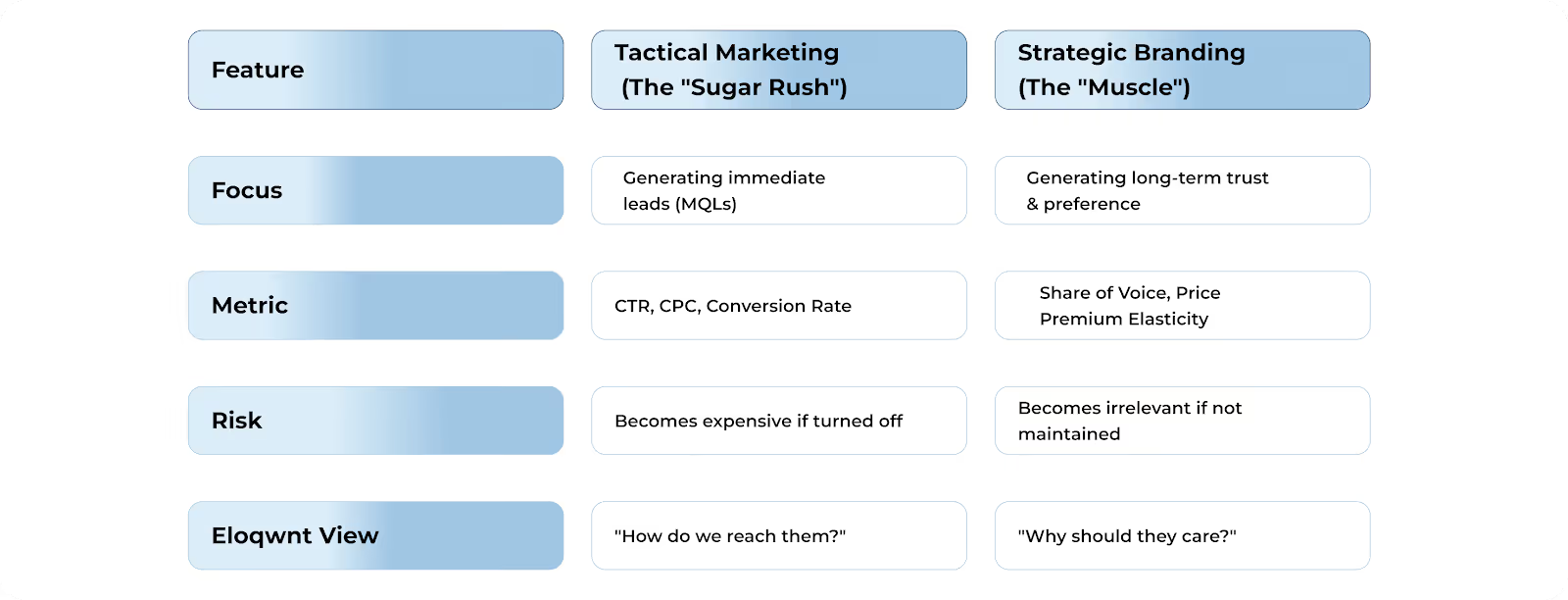
Comparison: Tactical Trap vs. Strategic Asset
Tactical Marketing delivers quick wins, while Strategic Branding creates lasting advantage.
Most teams today are chasing MQLs (Minimum Quality Leads). CROs track LTV/CAC over the long term.
This comparison table shows the difference between sugar rush vs. muscle memory for your department’s economics.
Why "Series B" is the Breaking Point
You scaled Product-Market Fit through cold emails and pure founder hustle. It was a feat of manual labor that got you to $10M in annual revenue.
But when you enter Series B, the game changes. The early adopters who believed in your “vision” are replaced by the pragmatic majority - and the pragmatics buy evidence, not vision.
Early adopters vs. pragmatic majority
Early adopters were willing to skip the “Sea of Sameness” website template if its features solved a burning pain.
Pragmatists, however, view MVP branding as a diagnostic signal of startup risk.
To capture this segment, your visual maturity must reflect the enterprise-grade reliability they demand.
The Scaling Trap: Protecting Multiples
At Series C, the important metrics shift toward LTV/CAC > 3x and institutional stability.
Procurement teams now audit your brand infrastructure long before you reach the RFP stage. Every point of friction in your brand identity is a direct drain on your business value.
The Foundation®: Transforming Friction into Authority
Eloqwnt bridges the gap between your technical excellence and your market perception.
We establish a strategic baseline that transforms product friction into undeniable category authority.
By practicing your trust signals, we ensure your brand continues to sell to pragmatists long after the founder leaves the room.
Frequently Asked Questions
How does branding impact B2B valuation?
Branding directly increases your valuation multiple by minimizing "startup risk" and signaling predictable revenue to institutional investors.
In B2B, category authority secures higher EBITDA ratios, acting as an intangible asset that protects your future cash flows from market volatility.
What is the ROI of a Brand Operating System?
A brand management system actually delivers return on investment (ROI) across your entire P&L.
It institutionalizes the expertise to lower CAC, increase LTV through true trust, and end margin-eroding price wars.
Your brand stops being a cost center and instead becomes a multiplier for every marketing dollar.
Why is brand strategy considered a Capital Expense (CapEx)?
Marketing tactics are simply rented attention that disappears as soon as you cut your budget. Instead, a brand strategy creates an ongoing asset that works for you for years.
Your brand operating system is just as important; it’s the infrastructure that pays accumulated dividends.
Why Brand Architecture Matters for Institutional Trust
Advertising costs are simply rented attention that disappears with your budget, while a systematic brand is a capitalized asset that works 24/7.
Moving from manual sales to a brand management system protects your profits and significantly increases your valuation with investors.
Stop investing in noise - build the infrastructure that sells for you. Schedule a brand architecture audit with Eloqwnt.




The right partner at the right moment changes everything.
Tell us about your next stage.


