

Brand Infrastructure as a Catalyst for Capital: How Design Consistency Speeds Up Due Diligence

Brand consistency is not an aesthetic choice; it is a primary indicator of operational discipline.
Investors do not separate “branding” from “business” the way internal teams do.
They see inconsistent visuals and shifting language and conclude:
“If they cannot govern their own visual and verbal assets, what else is poorly managed?”
This assumption extends beyond marketing to code quality, financial reporting, internal governance, and execution risk.
Brand is an early indicator of how a company handles complexity.
Discipline leaves fingerprints everywhere.
Systemic brand consistency is about reducing perceived risk and accelerating the path to capital infusion.
The Psychology of Risk
Visual fragmentation signals technical debt to sophisticated buyers.
Inconsistent logos, decks, and digital assets trigger cognitive load - auditors spend hours reconciling mismatched elements instead of assessing core value.
This mirrors code debt: fragmented branding implies scattered governance elsewhere.
Investors equate visual chaos with operational risk, demanding deeper scrutiny.
Cognitive friction delays deals by 20-30% in fintech/healthtech M&A.
Cognitive psychology confirms: mismatched signals force mental reconciliation, eroding trust.
If visual standards falter, acquirers question compliance, data hygiene, and system scalability.
Cohesive systems provide instant proof of scalability governance, shifting perception from "pre-scale startup" to market leader.
Brand consistency becomes the proxy for operational maturity that sophisticated investors demand.
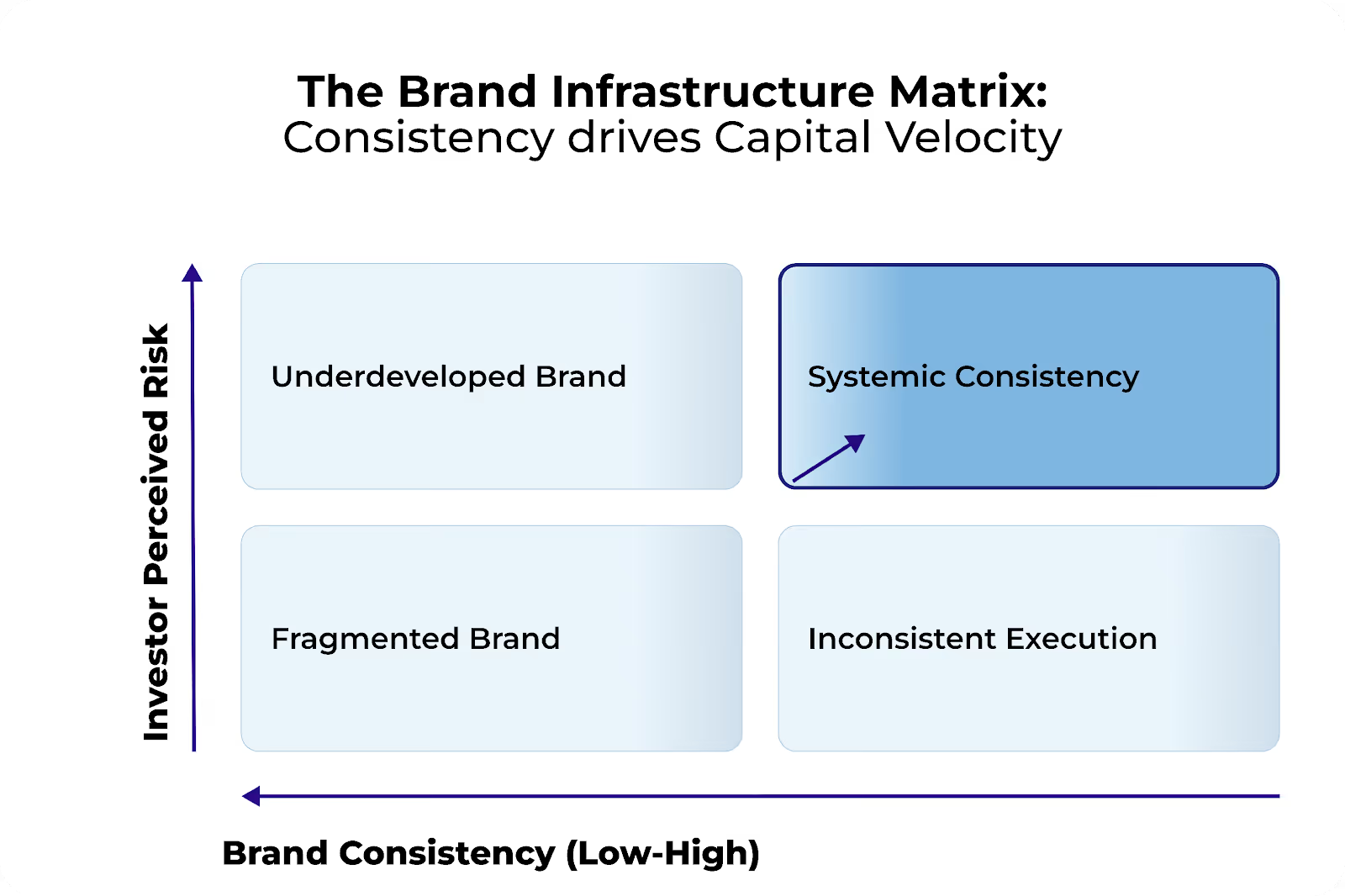
3 Ways Brand Consistency Compresses Deal Timelines
1. Accelerated Trust
Cohesive brands project structural integrity.
When every touchpoint feels governed and current, investors recognize a Category Leader profile.
Trust forms faster, and audit efficiency increases because the target appears institutional-ready.
2. Asset Organization
In well-managed companies, brand assets live within an integrated repository - every deck, logo, and policy sheet traceable and exportable.
This allows CFOs and legal teams to build data rooms faster.
Consistent brand infrastructure translates into audit efficiency, removing rounds of back-and-forth clarification.
(Explore our design debt audit for detailed governance methodologies.)
3. Scalability Proof
Systemically governed brands demonstrate that they can expand new markets, new product lines without proportional increases in overhead.
That scalability narrative is what signals valuation premium. Investors see a company ready to scale, not scramble.
For examples of how we implement scalable design systems that align with CFO-level growth metrics, visit our case studies.
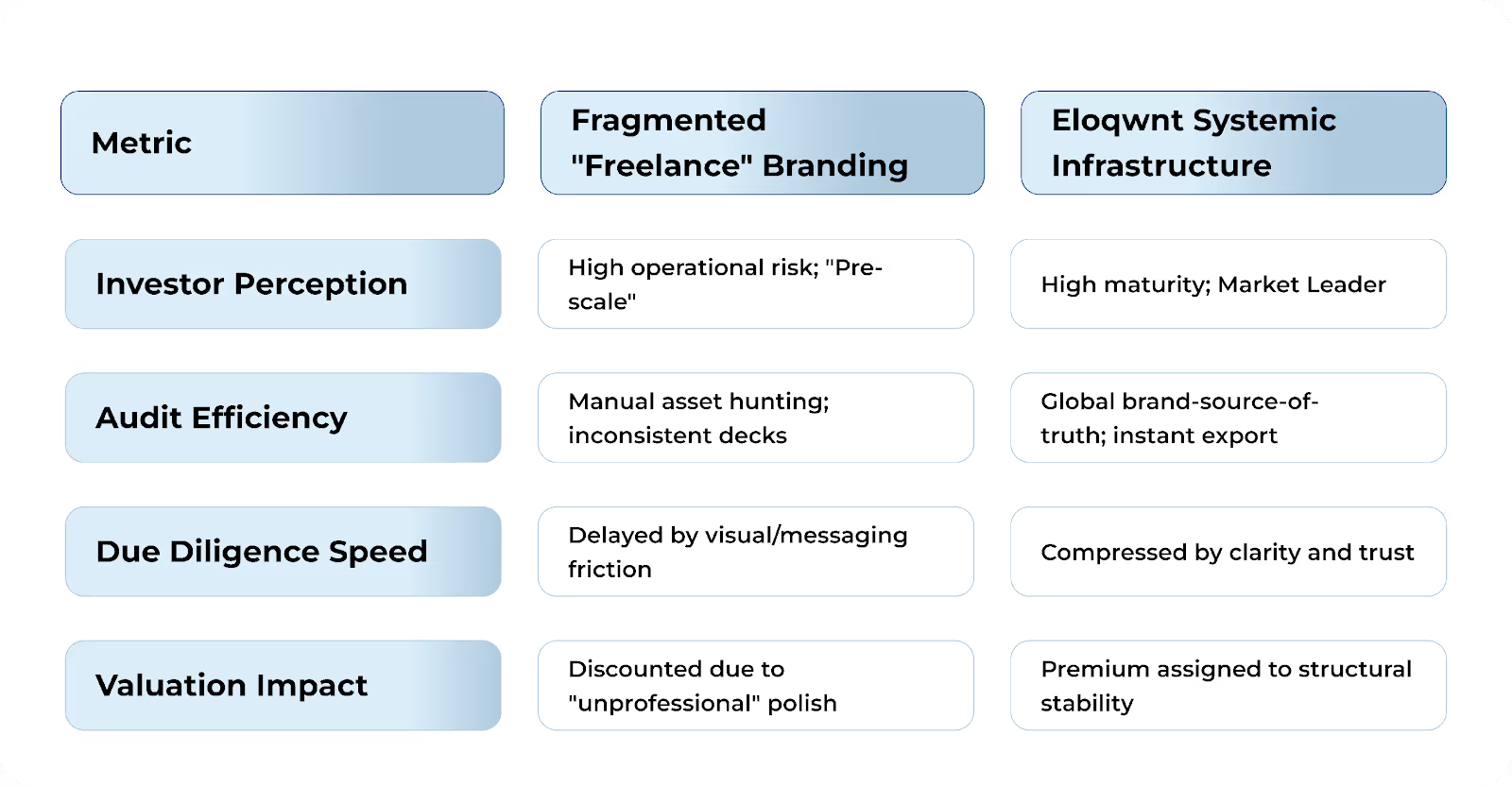
Infrastructure ROI: The Comparison
Fragmented branding slows down deal execution and evaluation.
Eloqwnt’s systemic brand structure is the bridge between "Chaos" and "Due Diligence Readiness," enabling three times faster data room preparation.
Investor FAQ: Operationalizing Your Visual Footprint
Q: Does design impact EBITDA?
A: Indirectly, yes. Design consistency reduces operational drag.
By standardizing sales assets and UI components, you lower the cost of customer acquisition and service delivery, which protects your valuation multiples during an audit.
Q: How does UX debt translate to financial liability during a tech audit?
A: Auditors view high UX/UI debt as a sign of technical neglect.
A fragmented interface suggests that the product is held together by "patches" rather than a scalable architecture, potentially leading to a lower valuation or a request for a capital holdback.
Auditors may quantify remediation at $500K–$2M, directly triggering price cuts or affecting earn-out structures.
Q: What are the "Red Flags" auditors look for in a brand's digital footprint?
A: Inconsistent iconography, outdated landing pages, and "off-brand" LinkedIn profiles for key executives.
These signals suggest a lack of centralized governance, raising red flags about the company's ability to scale without breaking.
Eliminating Design Debt Before the Round
Brand consistency is a high-leverage move for any founder looking at an exit or a major round within the next 12 months.
It is the difference between an investor asking, "How does this work?" and "When can we start?"
Stop treating your brand like a decoration.
Treat it like commercial infrastructure that protects your equity.
Audit your brand infrastructure today.
Contact Eloqwnt to eliminate design debt and align your visual identity with your financial reality before your next round.




The right partner at the right moment changes everything.
Tell us about your next stage.


