

The Economics of Brand: Turning Identity into Infrastructure for Valuation

The Infrastructure Mindset: Brand is Not a Cost Center
In the traditional accounting view, branding is often buried under "General & Administrative" or "Marketing Expense."
This is a fundamental misclassification that leaks value during due diligence.
For Series B/C companies, brand is not a one-time cosmetic spend, but a critical component of your commercial infrastructure.
Strategic Asset vs. Operational Expense
The "Economic Inversion" of Intangibles
Modern valuation is no longer dominated by physical assets.
According to data from Ocean Tomo, intangible assets now constitute approximately 90% of all business value for S&P 500 companies.
This shift represents a wholesale “economic inversion” where economic worth has migrated from what can be “touched” to what can be “thought.”
Branding as a CapEx Investment
When identity is treated as CapEx, it functions as a scalable system that compounds in value over time.
In this context, Brand Equity is measured not by awareness, but by pricing power and CAC efficiency.
It transforms from a discretionary line item into a defensible asset that anchors your price point and reduces enterprise risk.
Discipline in visual and verbal assets signals institutional readiness.
The Three Levers of Brand ROI
Brand is not your logo.
It’s not your colour palette. It’s not the new website your board is obsessing over.
Strategic branding is a financial tool. And when you treat it like commercial infrastructure, not cosmetic polish, it pulls three very powerful levers:
1. Pricing Power (Margin Defense)
Trusted brands command 20-30% premiums, hedging margins against "race to the bottom."
By aligning visual cues with technical excellence, you establish a premium positioning that shifts the conversation from cost to value.
This reduces price sensitivity and protects your EBITDA in high-stakes negotiations.
2. Sales Velocity (Friction Reduction)
Clear "transition to value" via high-quality design cuts sales cycles, reducing cognitive friction and "trust tax."
This directly impacts sales velocity and improves overall CAC ratios.
A consistent optic ensures that your ACV remains sustainable as prospects spend less time questioning your maturity and more time assessing your ROI.
See how we’ve helped companies transition from risky startups to market leaders in our projects.
3. Recruitment Efficiency (Talent Magnetism)
Strong employer brand magnets talent, cuts hiring costs, boosts retention.
High-quality branding attracts top talent 80% more effectively.
This ensures that your team remains elite while protecting your return on investment (ROI).
Reducing turnover and friction during recruitment allows you to scale your human capital without additional costs.
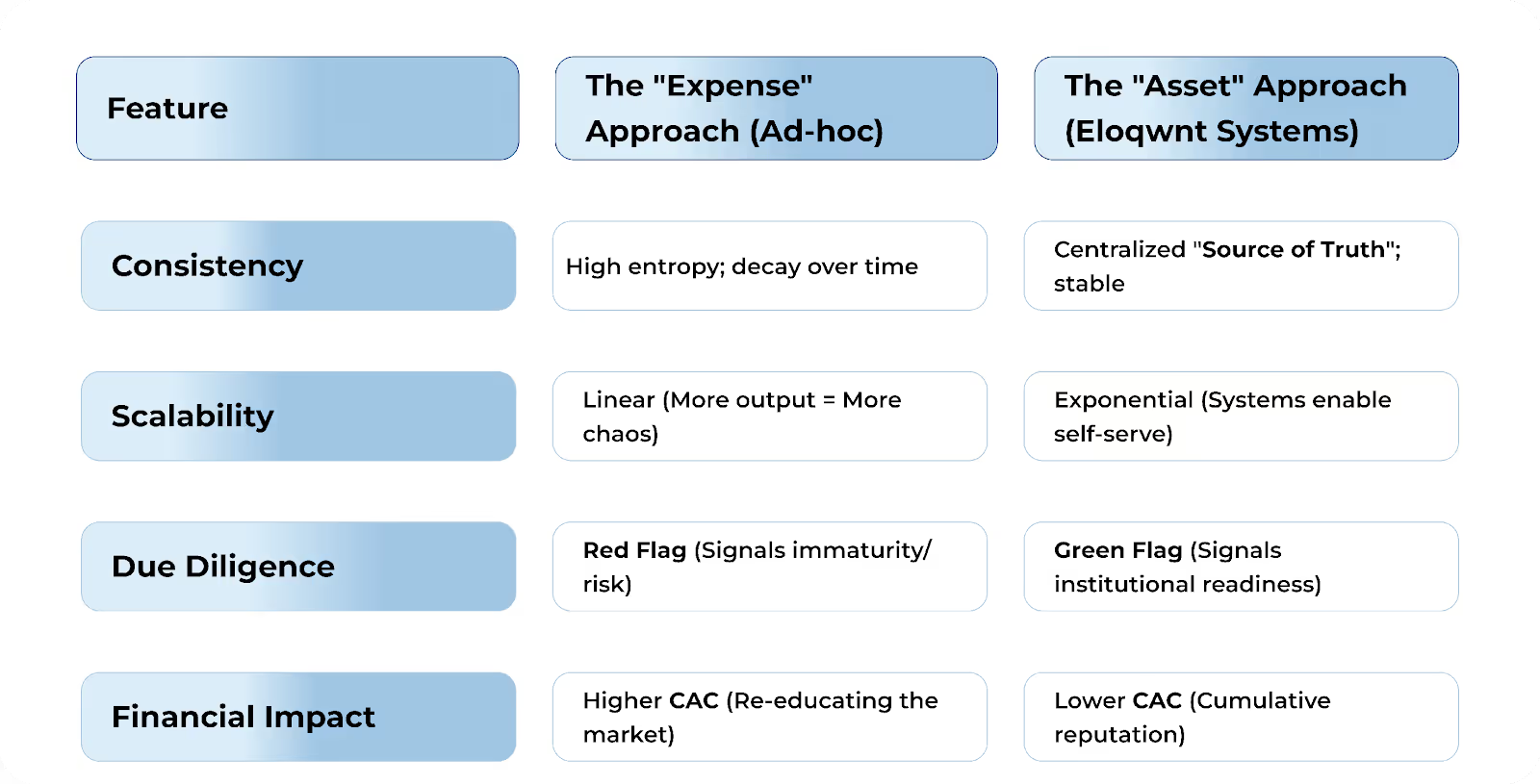
Comparative Analysis: Ad-Hoc vs. Infrastructure
Design is not a task on a to-do list.
While many companies view design as a series of one-off creative tasks, market leaders treat it as a permanent foundation for growth.
This comparison shows why shifting from an Ad-hoc approach to a systemic infrastructure is the key to margin defense.
What Investors Actually Look For
Q: How does branding affect my valuation multiple?
A: It reduces enterprise risk.
Lower risk directly translates to a higher multiple.
By applying Eloqwnt’s Valuation-Driving Design Framework, you prove the sustainability of revenue beyond the founder.
Strategic alignment of your visual assets creates a state of investor readiness, ensuring that design consistency speeds up the due diligence process and justifies a higher EBITDA multiple.
Q: Is rebranding risky pre-IPO?
A: Only if it is purely cosmetic.
Strategic rebranding is a risk-reducing strategy that prepares a company for public scrutiny.
Q: How do we measure the "Brand Contribution to Enterprise Value"?
A: Brand equity isn’t a vibe. It’s measurable.
It is defined by pricing power and CAC efficiency.
To evaluate this, shift focus from vanity metrics to organic search volume, close rates, and price sensitivity as direct indicators of margin defense.
When LTV rises while CAC remains stable or drops, your brand infrastructure is officially performing as a high-leverage capital asset.
The Final Thoughts
You cannot scale a Series C company using Series A brand infrastructure without leaking significant value.
Fragmented visuals and inconsistent messaging signal “startup risk” to sophisticated auditors.
This often leads to capital holdbacks or lower valuations during an exit.
Move beyond viewing your brand as a visual layer and start treating it as a core commercial asset.
It is the difference between an investor asking "How does this work?" and "When can we start?"
Stop spending. Start investing.
Schedule a Brand Economics Assessment with Eloqwnt to see where your current identity is leaking value and how to align your optics with your financial reality.




The right partner at the right moment changes everything.
Tell us about your next stage.


