

From Decoration to Infrastructure: Operationalizing Brand for Long-Term Valuation
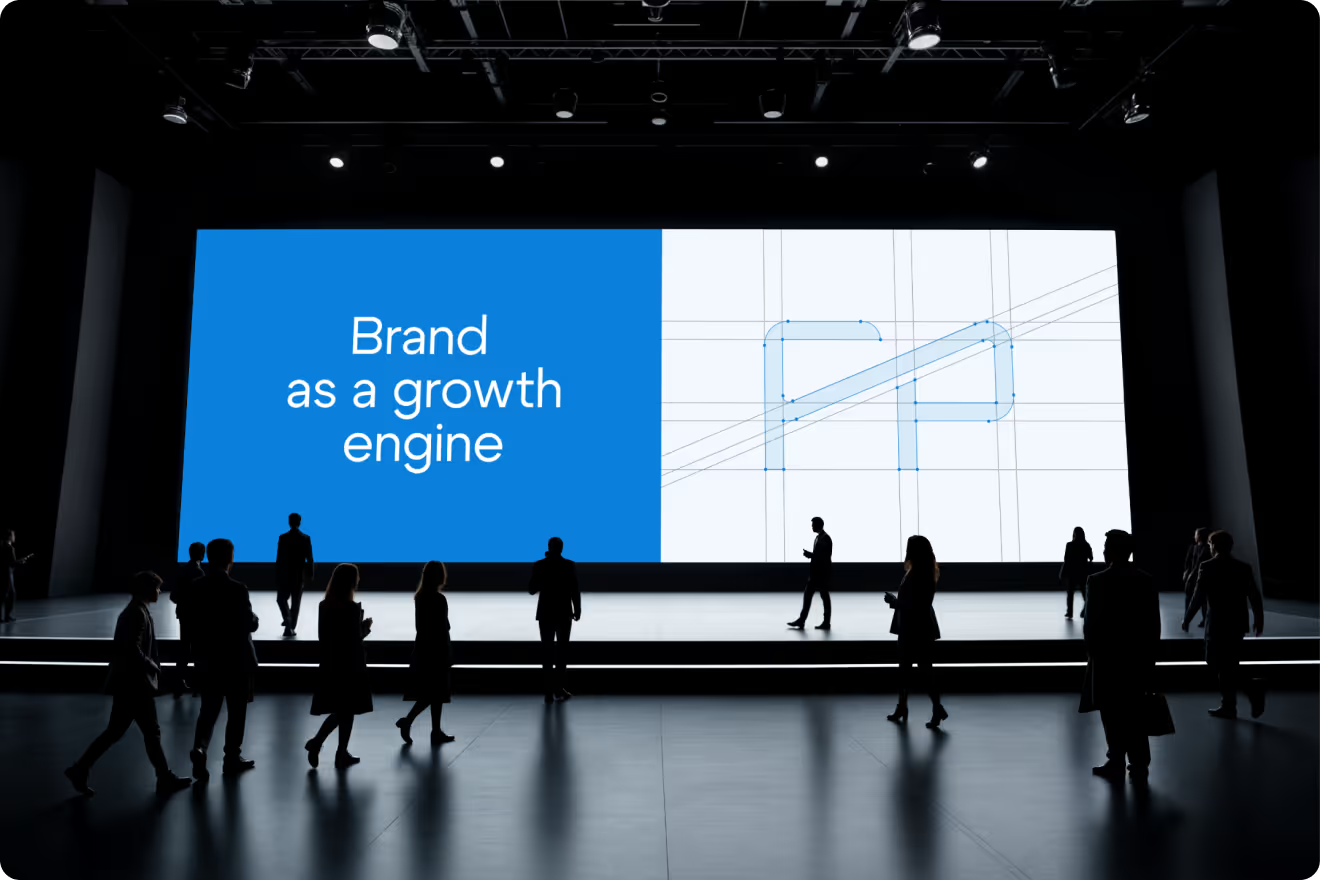
Is Your Brand a Drag on Your EBITDA?
Your revenue is growing, your headcount has doubled, and your product is winning technical tests.
However, there are lingering frictions. Your market perception is not keeping up with your operational reality.
This is the Growth gap - a dangerous space where enterprise-level businesses are still stuck in the visual identity of the “garage phase.”
What is the strategic role of branding in B2B growth?
In high-stakes B2B markets, branding is much more than just an aesthetic choice.
It acts as a trust accelerator that lowers CAC and protects premium pricing models from the brunt of commoditization.
The Hidden Tax of Brand Obsolescence
When a business outgrows its brand, it pays a “complexity tax.”
A weak or fragmented identity slows sales cycles and forces founders to remain personally involved in every high-value demonstration.
Strategic branding is a brand operating system that allows a business to scale its authority without the direct intervention of the founder.
Trust as a financial asset
According to the McKinsey Design Index, companies that prioritize strategic brand design and infrastructure achieve nearly twice the revenue and shareholder return growth of their industry peers.
At the scaling stage, branding becomes a systematic tool for protecting valuation.
The Premium Gap: The High Price of DIY Identity
Imagine buying a Swiss watch and receiving it in a plastic bag.
No matter how perfect the inner workings are, you immediately doubt its value.
In B2B, it’s the same: corporate product + startup visual design = lost EBITDA.
If your visual design doesn’t match your price, you’re losing the deal on a subconscious level.
The "Price Anchor" Effect
Branding acts as a psychological anchor.
A trusted brand justifies premium pricing by signaling stability and leadership.
Without it, you’re forced into a “race to the bottom,” where procurement teams default to offering the lowest price.
Eloqwnt views branding as a defensive valuation mechanism: we ensure that your market perception matches your technical excellence.
Operationalizing the Brand: From Intuition to System
To scale beyond the 50-employee mark, your brand must stop living in the founder’s head.
It must transition from an abstract feeling into a robust "Brand Operating System" that functions autonomously.
Depersonalization: Moving from Founder’s Intuition to “Brandbook”
In the early stages, the founder is the brand. However, scaling requires moving that vision out of the founder’s head and into a systematic framework.
To solve this, Eloqwnt utilizes our proprietary "Codifying Genius" Protocol - a strategic process designed to extract and translate a founder’s raw intuition into a scalable, autonomous brand operating system.
This transformation ensures the brand speaks with equal authority and consistency, whether the founder is in the room or not, effectively removing them as a bottleneck for growth.
Consolidation: Destroying the “Frankenstein” Visual Identity
Rapid growth or mergers and acquisitions often result in a “Frankenstein” identity - a disjointed mix of old billboards and inconsistent logos.
This fragmentation can signal instability to corporate buyers.
Consolidation is about removing the clutter to create a unified visual infrastructure that reflects your current market scale.
Governance: Implement a toolkit for sales autonomy
A brand is only as strong as its execution.
Think of a modular brand toolkit as giving your team “LEGO blocks” rather than a ready-made sculpture.
They have the freedom to build what they need, but the pieces always fit together perfectly.
By providing high-fidelity, self-serve assets, you grant your teams the autonomy to close deals independently, transforming scattered marketing projects into a robust infrastructure that ensures consistency and protects your valuation.
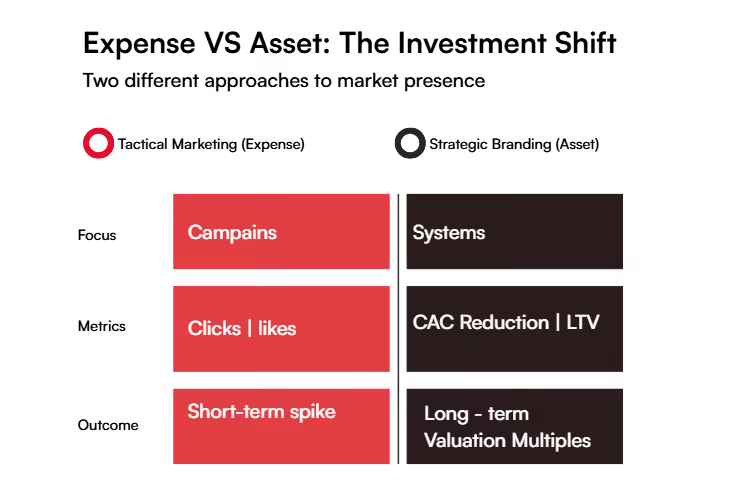
Expense vs. Asset: The Economics of Brand Equity
Transforming branding from an operating expense into a capital asset means moving from constantly "renting" market attention to owning your own strategic infrastructure.
In the table below, we break down exactly how this shift in focus transforms your balance sheet:
Frequently Asked Questions
How does branding impact B2B valuation?
In high-stakes B2B markets, branding is not about “aesthetics” but a protective valuation mechanism that signals stability and leadership to investors.
By codifying trust in a systematic infrastructure, you justify premium pricing and protect your long-term valuation multiples from commercialization risk.
What is the ROI of a brand management system?
A robust brand management system delivers a return on investment by reducing your CAC and accelerating sales cycles through radical clarity.
It transforms design from a creative bottleneck to a streamlined engineering process.
This allows your team to move faster, achieving nearly twice the revenue growth of industry competitors
The Strategic Economics of Branding
For many tech founders, branding is still seen as a “decorative” issue.
However, during the active scaling phase, the lack of a systematic brand becomes an operational bottleneck.
We’re too technical for ‘branding.’
High technical complexity is exactly why you need branding.
In a saturated market, complexity without radical clarity leads to lost market share.
Your brand must translate technical language into business value.
Otherwise, you’re leaving the customer alone with decision paralysis.
Does it slow down delivery?
On the contrary, a robust design system is an accelerator.
Instead of designing interfaces or marketing materials from scratch every time, your team utilizes Eloqwnt’s 'Brand Toolkit' - a modular, self-serve design infrastructure that replaces marketing chaos with pre-validated components.
This doesn’t just maintain visual integrity; it radically accelerates time-to-market.
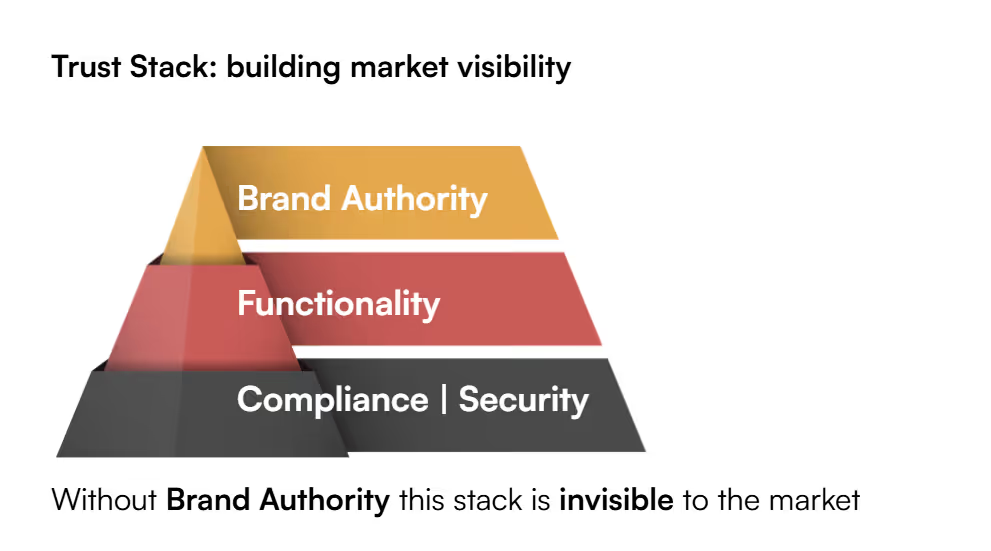
Restructuring the Balance Sheet
In the B/C series, rebranding is not a creative project, but a cold-blooded restructuring of your balance sheet.
Replacing the visual elements of the “garage phase” with a solid infrastructure becomes a thoughtful step to maximize your market capitalization.
Branding is simply how you operate in the trust market.
Systematic authority is the engine that eliminates organizational friction and reduces your CAC.
Think of this investment as insurance against commercialization.
A carefully designed system turns the abstract value of a product into a tangible financial asset.
Stop decorating. Start building the infrastructure.
Is your product ready for the next level? Schedule your Brand Economics Assessment.




The right partner at the right moment changes everything.
Tell us about your next stage.


